News

APOD: 2026 October 20 – An Anticrepuscular Rainbow Fan
APOD Science APOD APOD: 2026 October 20 – An… Today’s APOD Archive Submissions Index Search Calendar RSS Education About Discuss APOD Astronomy Picture of the Day Discover the cosmos! Each day a different image or photograph of our fascinating universe is featured, along with a brief explanation written by a professional astronomer. An Anticrepuscular […]
Read full story →
The Human Fingerprint on Earth’s Water Cycle
Human activities have become intertwined with how water is distributed across the continents. A new study brings their effects into sharper focus.
Read full story →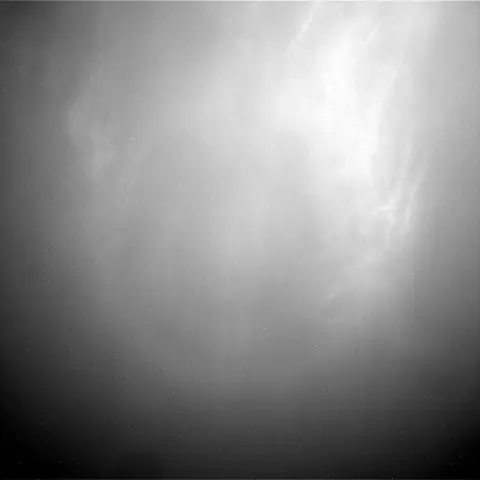
Curiosity Blog, Sols 5036-5042: Watching the Clouds Go By
Written by Alex Innanen, Atmospheric Scientist at York University Earth planning date: Friday, Oct. 9, 2026 Happy New Mars Year! We mark the start of a new year on Mars at the beginning of the northern hemisphere spring, or the vernal equinox. We then keep track of the seasons by counting degrees of solar longitude […]
Read full story →
JAXA’s MMX Enroute to Mars To Return Samples of Phobos
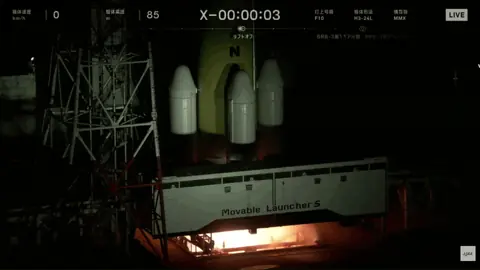
The Japan Aerospace Exploration Agency successfully launch the Martian Moons eXploration (MMX) mission this afternoon EDT. MMX will not land on Mars, but instead explore its two moons, Phobos and […]
Read full story →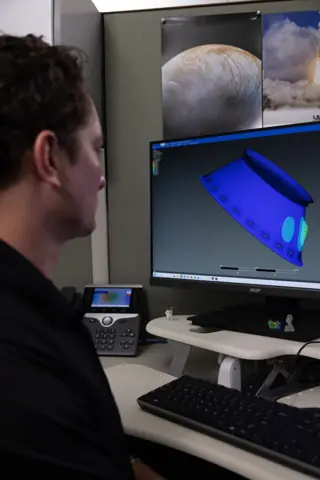
NASA Improves Shock, Vibration Analysis
Rockets vibrate, shake, and flex intensely as they climb into space, and spacecraft packed with delicate scientific instruments must survive those forces. Before any rocket leaves the ground, NASA engineers work to predict how those stresses will affect every part of a spacecraft. To do that, engineers in the Dynamic Environments Group with NASA’s Launch […]
Read full story →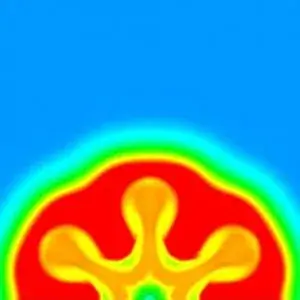
Software
Research teams at NASA’s Glenn Research Center are involved in developing theory and software to predict the noise from aircraft engines. This software helps engineers to design and analyze new and improved aircraft propulsion systems. Copies of our software can be requested from NASA’s Software Catalog. JeNo Development of jet noise prediction codes is multifaceted. […]
Read full story →
Experimental Facilities
Research teams at the NASA Glenn Research Center perform experiments in world-class facilities such as the 9- by 15-Foot Low-Speed Wind Tunnel (9 x15 LSWT), the Aero-Acoustic Propulsion Laboratory (AAPL), the Small Hot Jet Acoustic Rig (SHJAR), the Nozzle Acoustic Test Rig (NATR), the DGEN AeroPropulsion Research Turbofan (DART), and the Acoustical Testing Laboratory (ATL). […]
Read full story →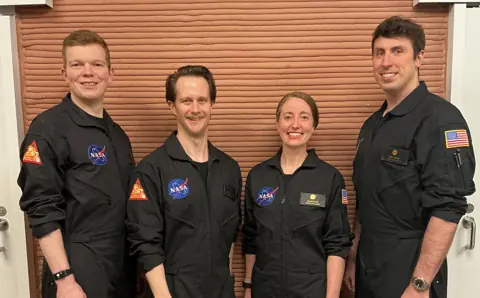
NASA’s Simulated Mars Crew Marks One Year Inside Habitat
The four crew members in NASA’s simulated Mars mission have spent the past year living and working in isolation in a confined habitat at NASA’s Johnson Space Center in Houston.
Read full story →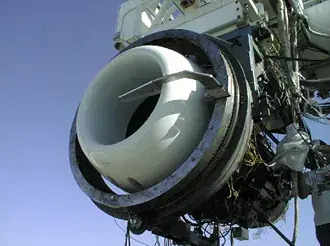
Instrumentation
To measure airflow and sound, research teams at the NASA Glenn Research Center use special instrumentation like particle image velocimetry, hot wire anemometry, Raman spectroscopy, microphones in phased arrays or continuously rotating rakes. The global aviation noise reduction community relies on data from NASA GRC experiments to validate theory and noise prediction software. Rotating Rake […]
Read full story →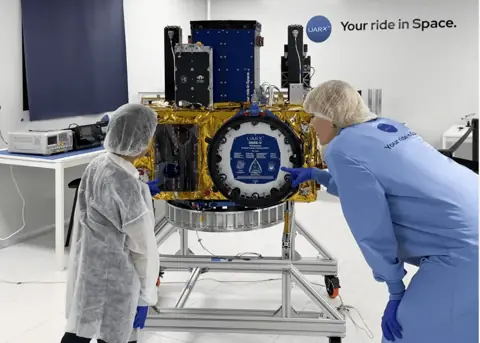
UARX Space troubleshoots anomalies on maiden OTV Flight
SAN FRANCISCO –Spanish startup UARX Space is remedying anomalies identified during the maiden flight of OSSIE-D, an orbital transfer vehicle (OTV) launched Oct. 1 aboard SpaceX’s Transporter-18 mission. At least […]
Read full story →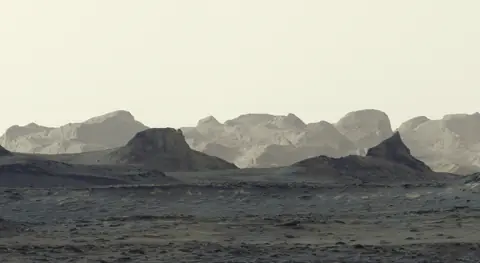
Martian Dawn
NASA’s Curiosity captures the dawn on Mars – as well as elongated ridges formed by wind erosion, or yardangs – in this close-up from a panorama released on Oct. 6, 2026. This is the most detailed view yet of distant, wind-carved Martian cliffs, highlighting features the mission’s scientists have long been waiting to see up […]
Read full story →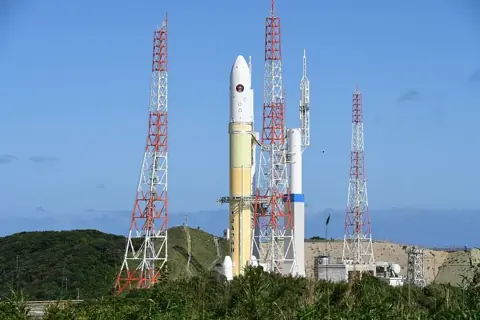
Japanese MMX mission set for launch to study Martian moons
The Japanese Aerospace Exploration Agency (JAXA) is poised to launch a planetary probe to Mars’s…
Read full story →
Celebrating BepiColombo, three words at a time
BepiColombo launched on 20 October 2018. This year, the anniversary is special. After eight years of travelling through the inner Solar System, the ESA/JAXA mission will arrive at Mercury on 9 December, 2026. To celebrate, mission team members were asked to describe BepiColombo in just three words.
Read full story →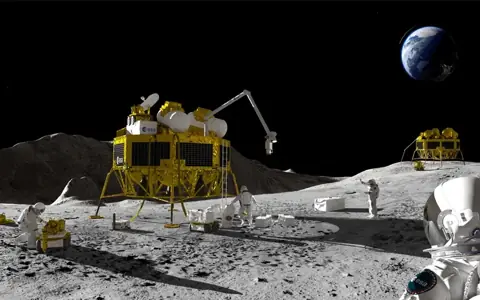
US political uncertainty complicates long-term Artemis commitments, Polish minister says
Political and budgetary uncertainty in the United States poses a risk to long-term planning for space exploration programmes, according to a Polish government minister. In a 13 October response to a parliamentary question, Polish Deputy Minister of Development and Technology Michał Jaros said Poland remained interested in participating in NASA’s Artemis programme but raised concerns […]
Read full story →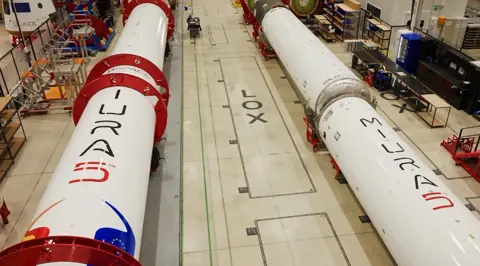
PLD Space begins system-level testing of Miura 5 as first three vehicles take shape
PLD Space has entered a new phase ahead of the first demonstration flight of its…
Read full story →