 53
In the world of spaceflight, launch infrastructure is critical for rocket launches. For agencies and companies wanting to move quickly from a rocket’s inception to its first flight, everything from launch pads to vehicle integration facilities to support infrastructure has to be constructed. NASA built the Kennedy Space Center in about five and a half years, Cape Canaveral Space Force Station took 14 months, and Starbase, Texas, has taken about four and a half years thus far.
With SpaceX’s recently announced Starbase site in Louisiana planned to support its first launch in approximately three years, a closer look at how other launch sites were built could offer insights into when we might expect the world’s latest spaceport to become operational.
Construction of the Kennedy Space Center
Kennedy Space Center, the United States’ premier launch facility for over 60 years, began construction in March 1962 as the Launch Operations Center. Renamed to “Kennedy Space Center” in November 1963 following the assassination of President John F. Kennedy, the site was to serve as a response to the Soviet Union’s Baikonur Cosmodrome in Kazakhstan.
With the looming goal of landing crews on the Moon before the end of the 1960s, construction crews moved quickly to build the launch site for those crews.
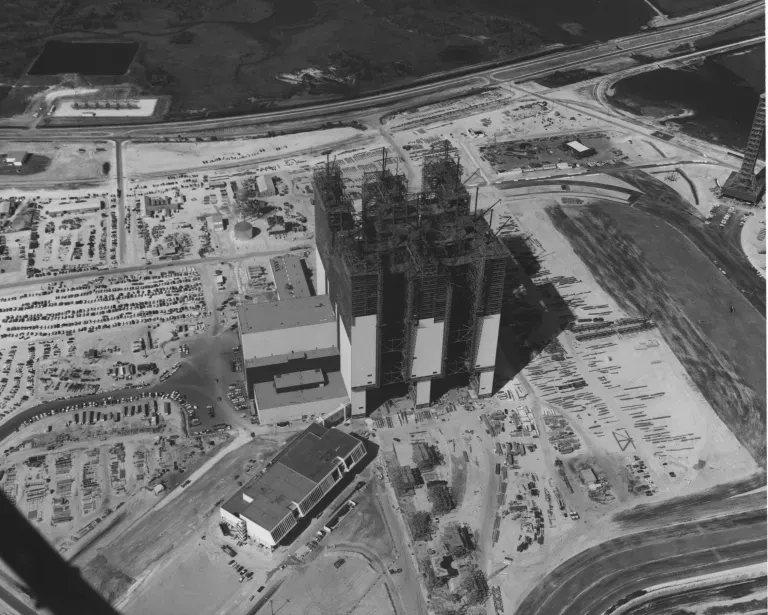 />
The Vehicle Assembly Building under construction in 1965 (Credit: NASA)
Construction on the Vehicle Assembly Building (VAB), then called the “Vertical Assembly Building,” began in August 1963. Crews built the massive VAB over a three-year period, finishing in 1966 with four high bays for assembling the massive Saturn family of rockets. On May 25, 1966, workers rolled out SA-500F from the VAB, a full-scale Saturn V test model.
Nearby, crews began building Launch Complex 39A (LC-39A) in November 1963 and completed it in September 1965 after 22 months. Construction of the adjacent Launch Complex 39B (LC-39B) began in December 1964 and was completed in April 1967, taking 28 months.
Teams spent another 26 months outfitting LC-39A for Apollo 4, which was scheduled to be the first launch of the Saturn V rocket; that mission ultimately launched on Nov. 9, 1967. LC-39B wouldn’t see its first launch until 25 months after its completion, with Apollo 10 on May 18, 1969.
In total, LC-39A took four years to reach launch readiness, while LC-39B took just under four and a half years. In spaceflight, speed is critical for agencies wanting quick launch capability. For NASA in the 1960s, that meant completing all major infrastructure for the Apollo program in just four years.
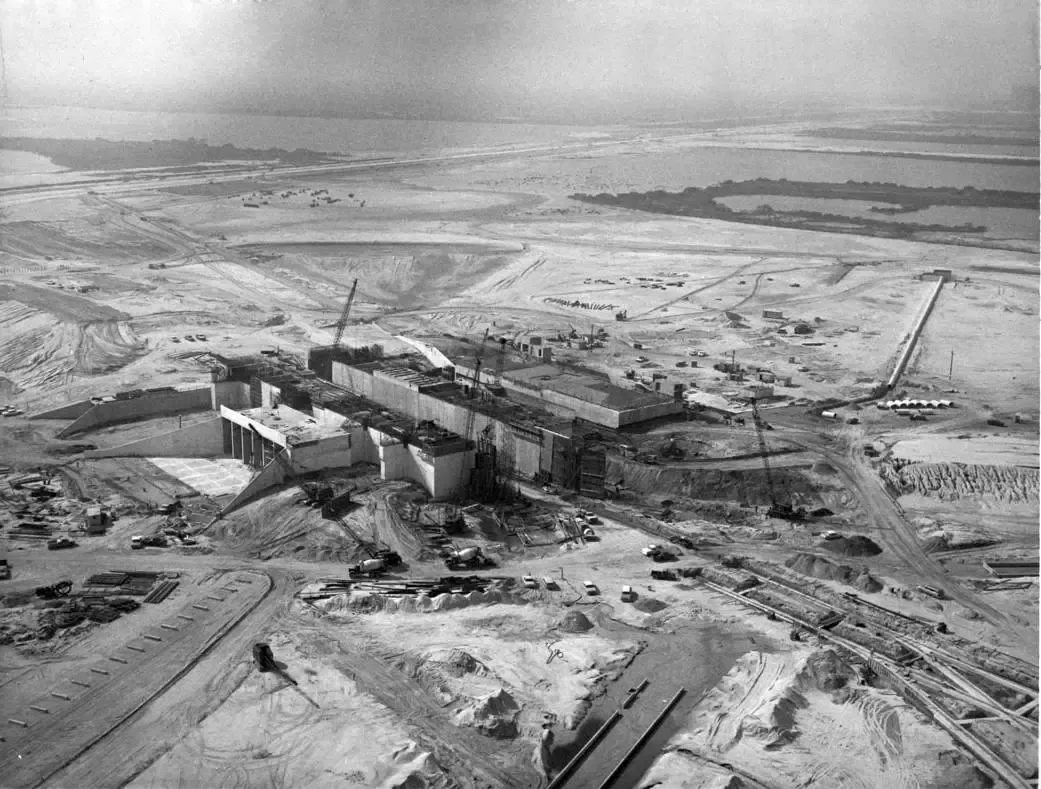 />
LC-39A while under construction in November 1965. (Credit: NASA)
Construction of Cape Canaveral Space Force Station
Cape Canaveral Space Force Station (CCSFS) began as a military launch facility known as the “Cape Canaveral Launch Area.” In the beginning, the earliest U.S. rockets required few established facilities, and the first U.S. missile launch from the site, Bumper 8, occurred in July 1950, just two months after construction began in May 1950.
Later sites supporting early crewed launches took longer to develop. Construction on Launch Complex 5 began in 1954, supporting its first launch in July 1956. Launch Complex 14 broke ground in January 1956 and saw its first launch in June 1957.
These early pads featured simple designs for low-powered rockets, with Launch Complex 5 consisting of a concrete slab and basic support structures, and Launch Complex 14 requiring a flame bucket to support early Atlas missiles.
Space Launch Complex 40 (SLC-40) was initially built in the 1960s to support Titan III launches, with its first launch in June 1965. SLC-40 would go on to serve as the launch site for the Titan 34D and Titan IV before being leased by SpaceX in April 2007.
Refurbishment of the pad for the Falcon 9 began in 2008, culminating in the rocket’s maiden flight in June 2010. After upgrades in 2013, the AMOS-6 anomaly severely damaged the pad in September 2016, requiring 15 months of repairs before it came back online in December 2017.
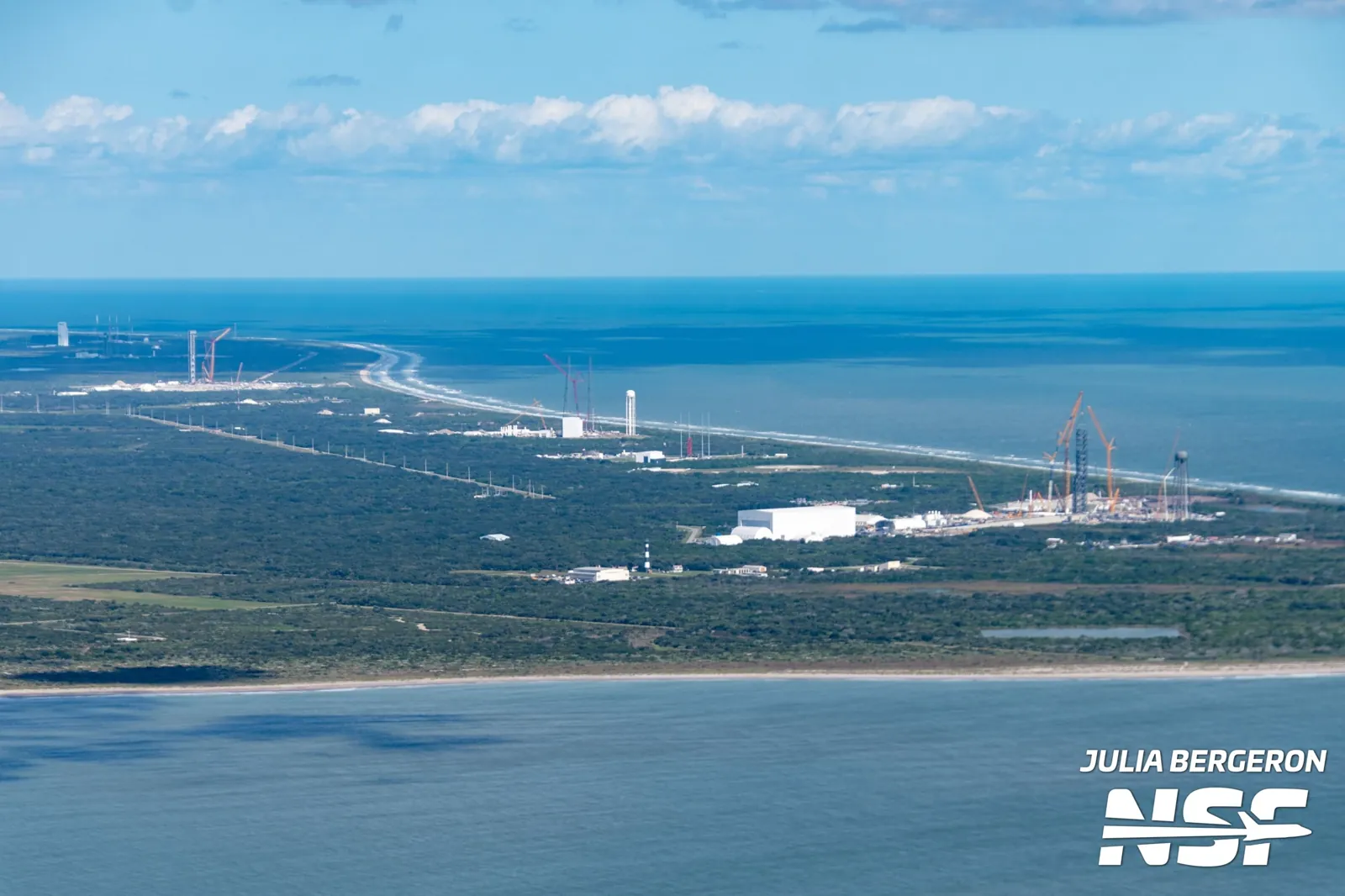 />
Aerial view of CCSFS in October 2026. From left to right: SLC-41, SLC-40, SLC-37, LC-16, LC-14, LC-36. (Credit: Julia Bergeron for NSF)
Nearby Launch Complex 36 (LC-36) was similarly constructed in the early 1960s to support Atlas-Centaur launches, with two pads in the complex, LC-36A and LC-36B. The site would see a total of 145 launches before being unused from 2005 to 2015.
Blue Origin leased the complex in 2015, and broke ground on its LC-36A refurbishment plans in June 2016. The company’s New Glenn rocket flew on its maiden mission over eight years later in January 2025, and would fly two more missions before an explosion during testing on May 28, 2026, severely damaged the pad. Blue Origin began repairs of the pad soon after, and is working to return New Glenn to flight before the end of 2026.
While LC-36A has been Blue Origin’s main focus of development at the LC-36 site, the company announced plans to refurbish the adjacent LC-36B site for the larger New Glenn 9×4 variant. However, a construction timeline for the site has not yet been discussed.
Sitting between SLC-40 and LC-36 is Launch Complex 14 (LC-14). Built in the late 1950s as the first operational launch site for the early Atlas rockets, LC-14 would go on to serve as the launch site for all four orbital missions in the Mercury program, including the Friendship 7 mission that made John Glenn the first American to orbit Earth. After Mercury, the site continued to see launches of Atlas-Agena rockets through November 1966, before it was decommissioned.
Stoke Space acquired a lease of the site in March 2023, and began refurbishment work in October 2024. Crews finished construction at the site in early 2026 after roughly 16 months, with Stoke aiming for a 2027 debut launch of its Nova rocket.
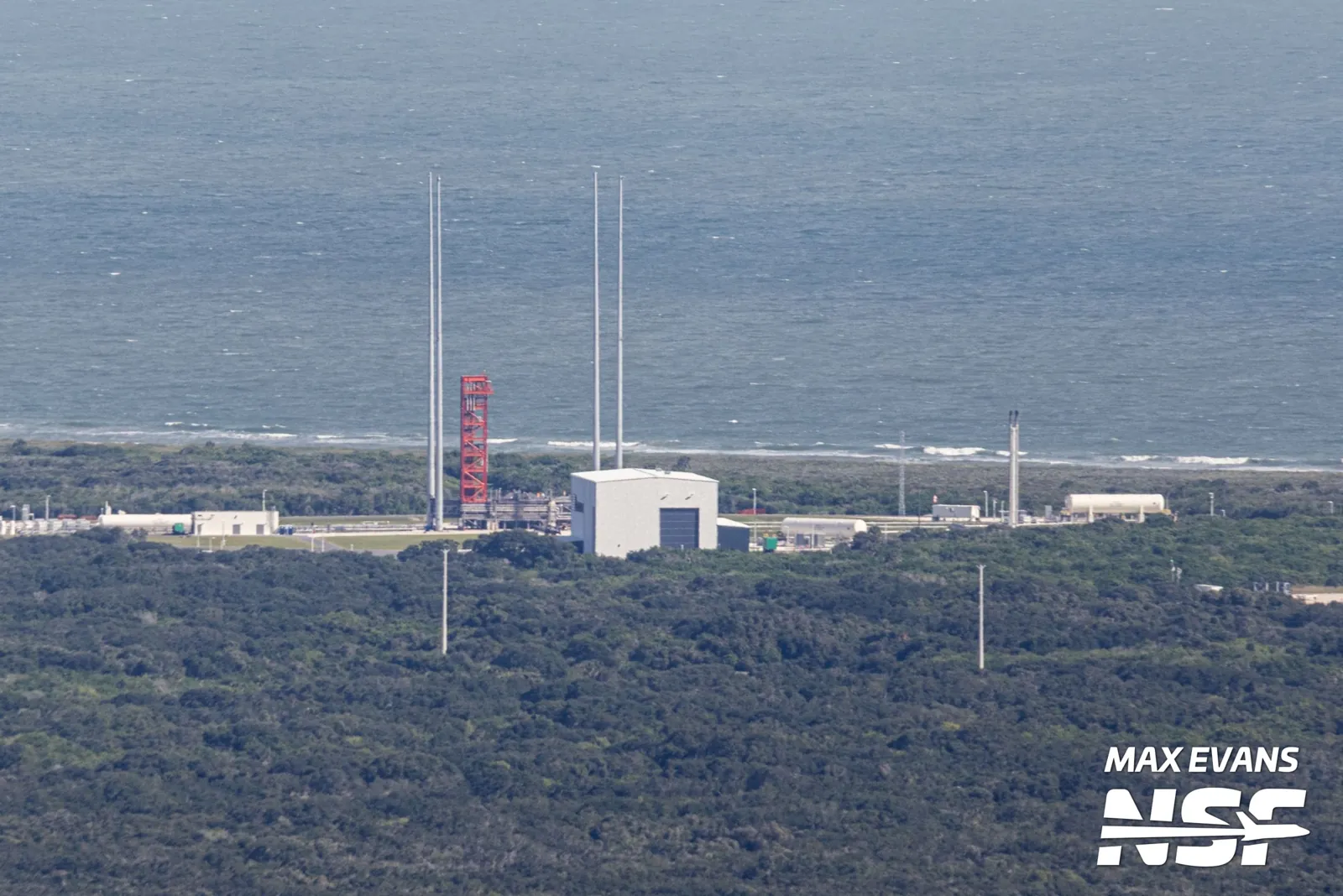 />
LC-14 as of Late October 2026 (Credit: Max Evans for NSF)
Another under-refurbishment launch site at CCSFS is Launch Complex 16 (LC-16). Like LC-14, the site was built in the late 1950s to test Titan missiles and served as the launch site for the Titan I, Titan II, Pershing 1a, and Pershing II missiles.
After 149 launches, the site was retired for 30 years until Relativity Space leased it in January 2019 for its Terran 1 launch vehicle. Terran 1’s one and only flight launched in March 2023, before Relativity canceled the vehicle in favor of the larger Terran R. The company once again began renovating LC-16 in 2024, this time for Terran R; construction is still underway, with the company hoping to launch Terran R in the coming months.
While CCSFS has been an established launch facility since the 1950s, the spaceport has seen rapid development and growth over the last decade, with the emergence of commercial space companies such as SpaceX, Relativity, and others. There are at least six active or under-development launch sites at CCSFS currently — a stark change from the facility’s status 20 years ago.
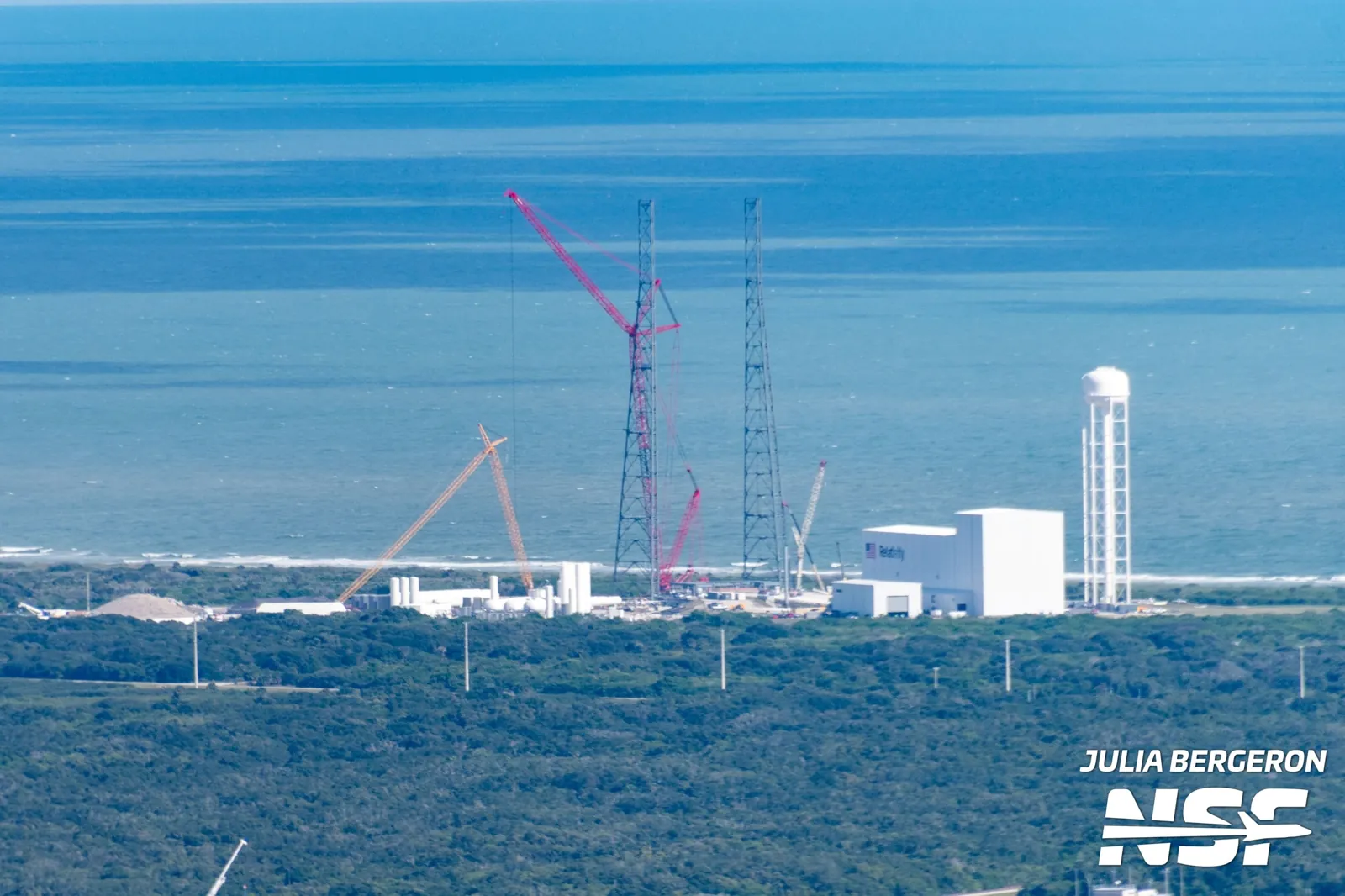 />
LC-16 as of Late October 2026 (Credit: Julia Bergeron for NSF)
Construction of Starbase, Texas
Turning to Starbase, construction has proceeded at a similarly rapid pace to Kennedy Space Center and Cape Canaveral Space Force Station. After an initial start on construction in 2014 in hopes of building a launch facility for Falcon 9 and Falcon Heavy, there was a brief pause in activity at the site once those plans were abandoned. Picking up once again in 2018, construction would move quickly to accommodate the first hop of Starhopper in August 2019.
Following the Starhopper hops, the site would see the construction of two suborbital launch pads and continued work on the suborbital tank farm. A year and four months after Starhopper’s final flight, Starship SN8 would take to the skies in December 2020. During mid-2020, following the tests of SN5 and SN6, the initial construction of Orbital Launch Pad 1 would begin.
Pad 1 would be completed in mid-2022 ahead of the first Starship flight test on April 20, 2023. However, construction would never completely stop at the site, with the pad seeing continuous upgrades and reworks throughout the first 11 flights of Starship. A better comparison of construction timelines is seen in Pad 2’s design.
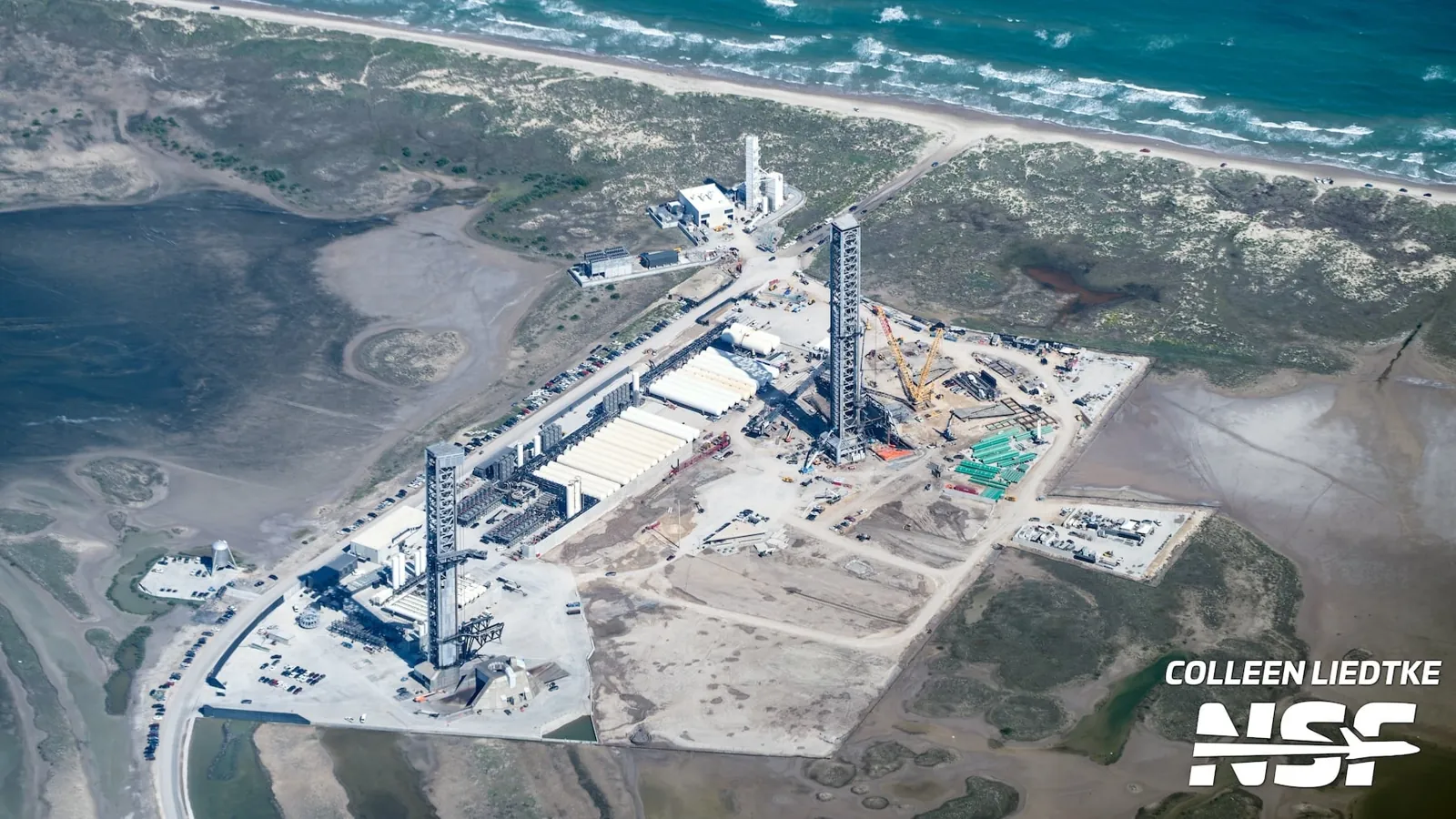 />
Pad 2 and Pad 1 at Starbase, Texas, in October 2026. (Credit: Colleen Liedtke for NSF)
Designed as a standardized pad layout for Starship, Pad 2 took roughly two years to build and to support its first flight. Looking back at Pad 1, which is currently undergoing major renovations to resemble Pad 2, a similar timeline is expected, with the notable exception that no new launch tower needs to be built. However, demolition and clearing time of the old pad infrastructure could prolong the renovation timeline.
The most notable site of rapid construction at Starbase is the Masseys test site. Built as a test site for Super Heavy boosters and Ships, the site regularly hosts cryogenic fuel load and static-fire tests. Masseys witnessed one of the most energetic events of the Starship program thus far: the explosion of Ship 36 on June 18, 2025.
Following the explosion, the site was severely damaged, most notably the static fire stand and its supporting infrastructure. While Starship flights continued during the site’s reconstruction, with Ship 37 and Ship 38 performing their static fires at Pad 1, Masseys would again support static-fire testing on April 14, 2026, just 10 months after the explosion.
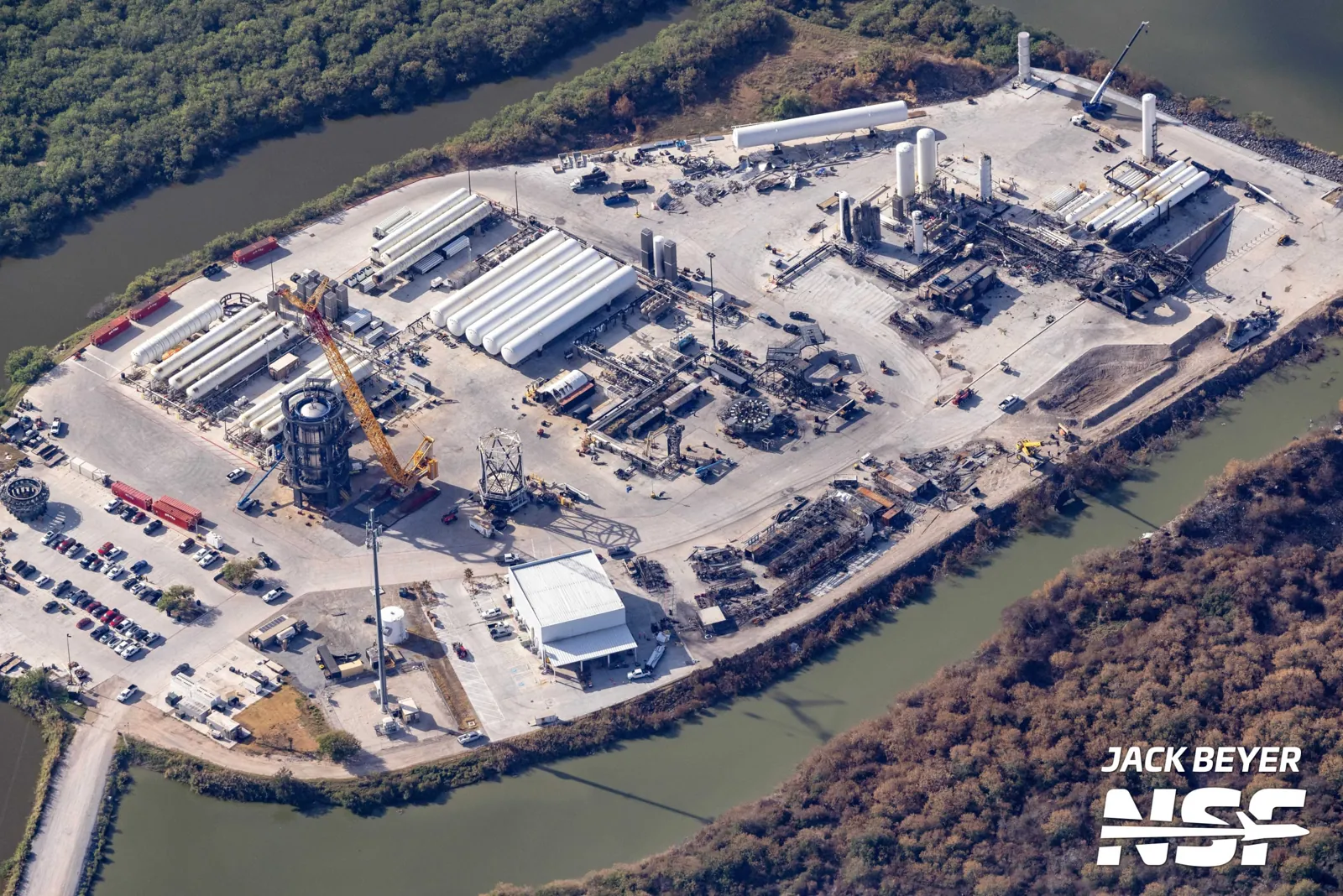 />
Masseys After Ship 36’s RUD. (Credit: Jack Beyer for NSF)
Construction of Starship’s LC-39A and SLC-37 pads
SpaceX’s rapid pace at Starbase, Texas, carried over to Starship operations at the company’s Cape Canaveral facilities, namely LC-39A and Space Launch Complex 37 (SLC-37).
At LC-39A, SpaceX began construction of the first Starship pad in September 2019. Work would then pause for several years and restart in late 2021 with the dismantling of the original structure, which was still based on the 2019 Starship design. The Starbase, Texas, Pad 1 design would begin to be implemented in 2021, with the tower built by September 2022.
However, this design would also be partially scrapped, with the original launch mount being dismantled in favor of the design that debuted at Pad 2 at Starbase. Major work and testing would be largely complete by October 2026, with modifications to the chopsticks that lift and catch Starship and to the orbital launch mount.
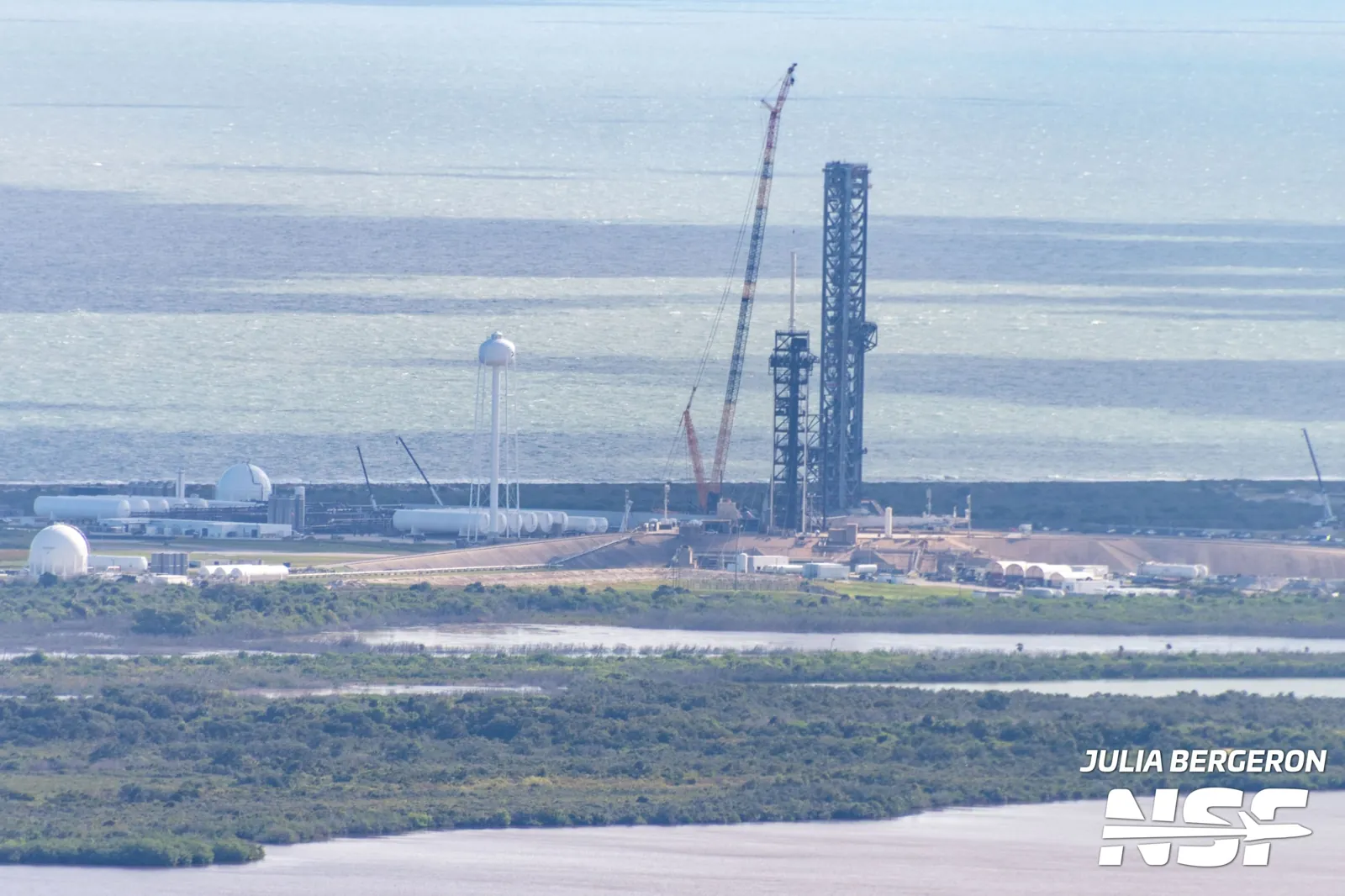 />
LC-39A as of Late October 2026 (Credit: Julia Bergeron for NSF)
SpaceX currently plans to launch Starship Flight 16 from this pad no earlier than December 2026, which, if the timeline holds, would give the site a total construction time of seven years and three months from the start of construction to launch.
On the CCSFS side, SpaceX acquired SLC-37 from the United Launch Alliance in March 2025 following the final Delta IV Heavy launch in April 2024. In June 2025, the Delta IV Mobile Service Structure and lightning towers would be dismantled via a controlled demolition. Following ground-clearing and the start of prep work on the pad, construction of the site’s first Starship tower would begin in June 2026 and be completed a month later, in July.
Plenty of work still remains at the site, but based on timelines from Pad 2 at Starbase, SLC-37’s first Starship pad may be ready to support a full Starship stack by late 2027 or early 2028.
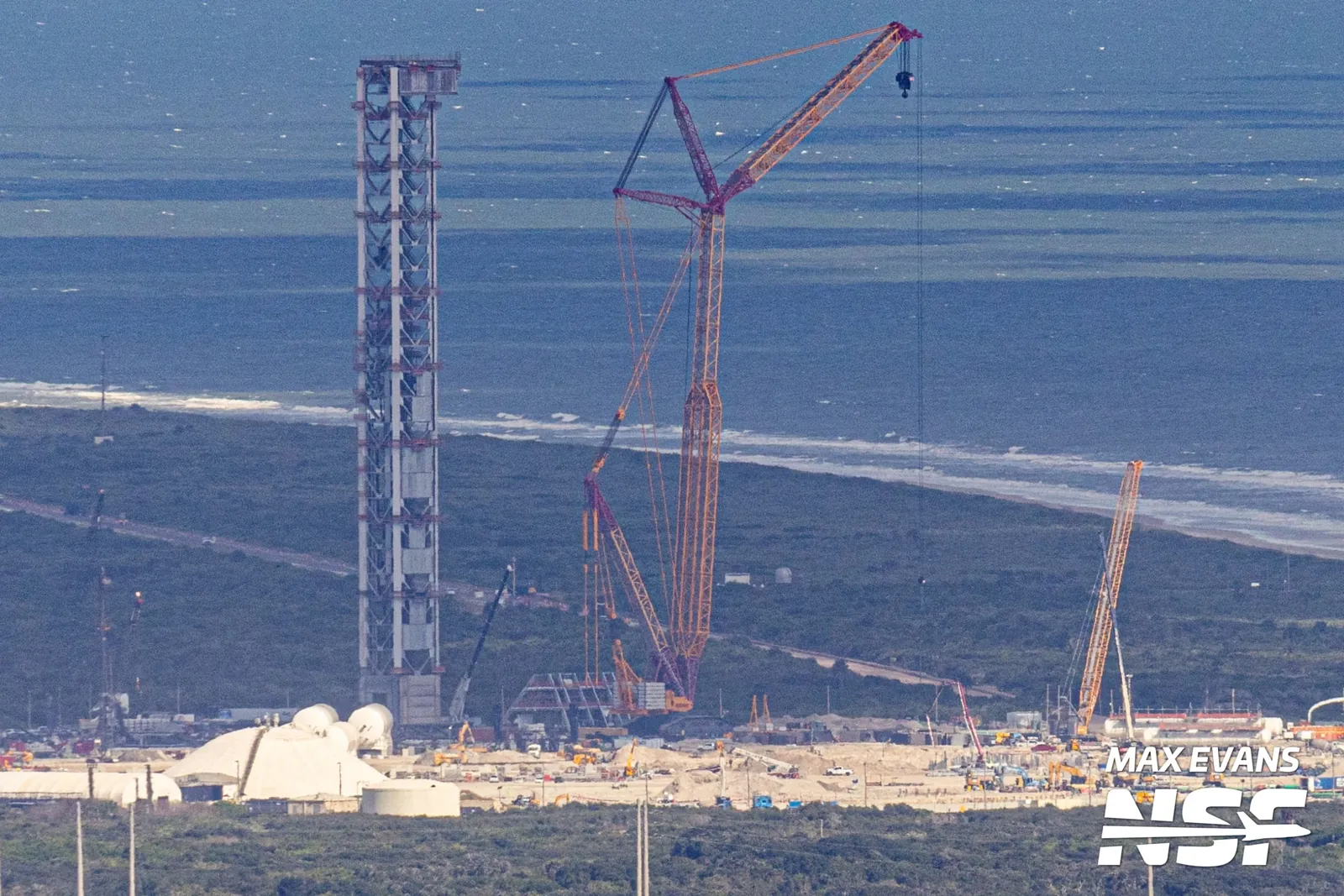 />
SLC-37 as of Late October 2026 (Credit: Max Evans for NSF)
Applying timelines to the new Starbase, Louisiana
Announced in August 2026, Starbase Louisiana is the newest site of the Starship program. Construction is set to begin in 2027 ahead of a first launch from the site in 2029. While the timeline is optimistic, the area is nearly entirely void of infrastructure.
A lack of preexisting infrastructure isn’t new to SpaceX and the Starship program, as the company developed Starbase, Texas, in a vast, mostly void area near the former Boca Chica village. While both Starbase, Texas, and Starbase, Louisiana, are similarly distant from major cities, Starbase, Louisiana, has very little infrastructure within its surrounding region.
SpaceX has learned a lot about building a pad for the world’s most powerful rocket with the continual construction of Pad 1 and the more streamlined construction of Pad 2. Pad 2 took 24 months to complete construction ahead of its first flight. Based on that timeframe, it could be expected that the pads, or at least the first pad at Starbase, Louisiana, could be built in a similar amount of time once all the hardware to build the site has arrived.
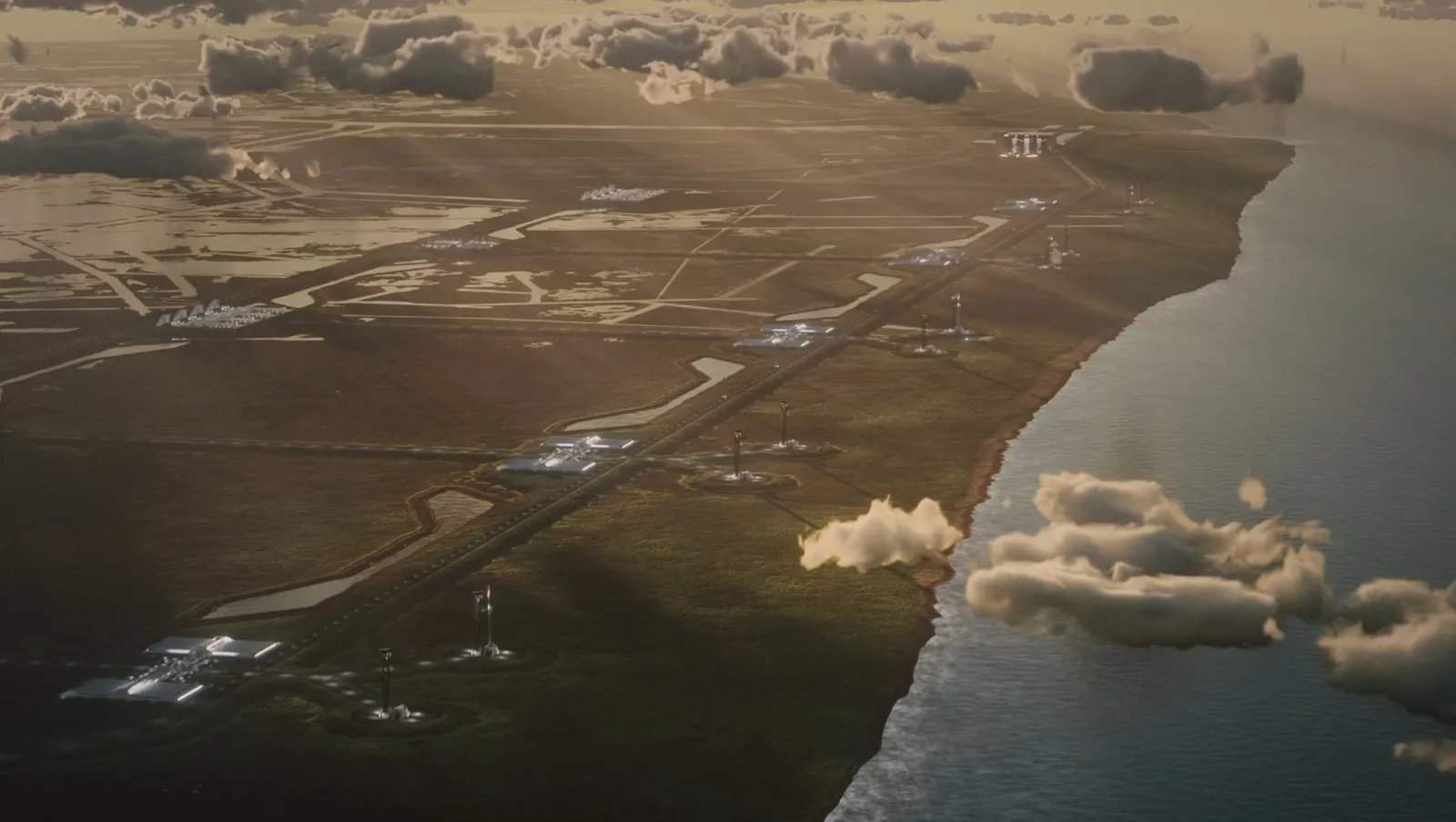 />
Render of Starbase, Louisiana. (Credit: SpaceX)
The arrival of construction hardware will likely be the holdup for construction at Starbase, Louisiana, as there is currently no hardware on site — unlike at Starbase, Texas, which SpaceX had begun developing in 2014 before construction for Starship began in 2018. As a result, the construction timeline for Starbase, Louisiana, may be more similar to that of the Kennedy Space Center.
Throughout history, building premier spaceflight infrastructure has always demanded a trade-off between speed and scale. NASA completed the Apollo-era facilities that serve as the foundation of modern-day Kennedy Space Center in roughly four years, setting a baseline for large-scale construction. CCSFS demonstrated that rapid deployment is possible when pads require basic structures, though modern orbital pads naturally demand more time. At Starbase, Texas, SpaceX proved it could iterate quickly, moving from early test sites to a standardized orbital pad in under two years.
Starbase, Louisiana, now faces the challenge of starting entirely from scratch. While SpaceX can apply its Pad 2 design lessons to speed up pad construction, the site lacks basic surrounding infrastructure and existing hardware. If historical timelines hold, building Louisiana’s pads, assembly buildings, and support networks will likely mirror the comprehensive four-year effort of the early Apollo program rather than a rapid retrofit. A 2029 target is ambitious, but leveraging past lessons gives SpaceX its clearest roadmap yet.
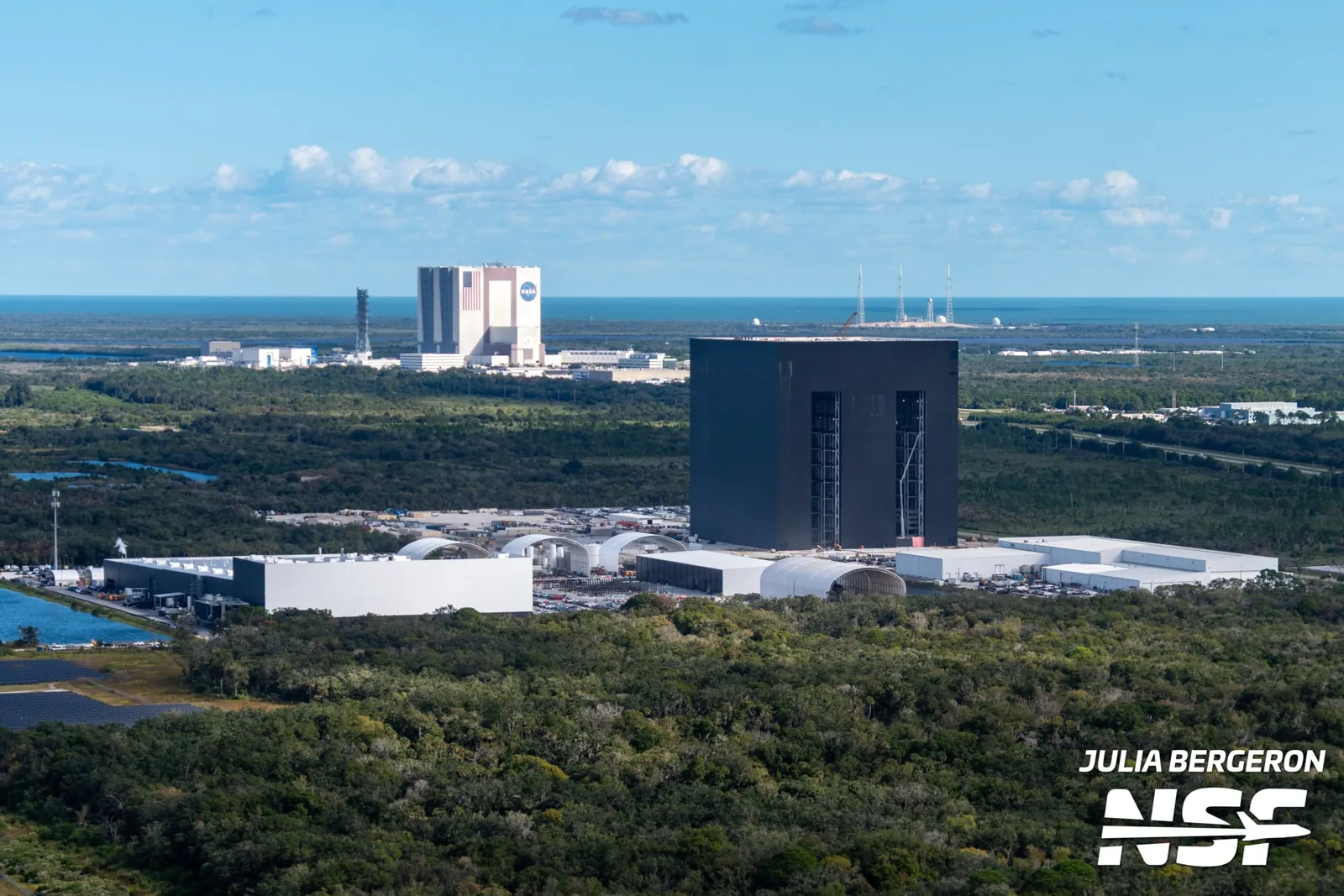
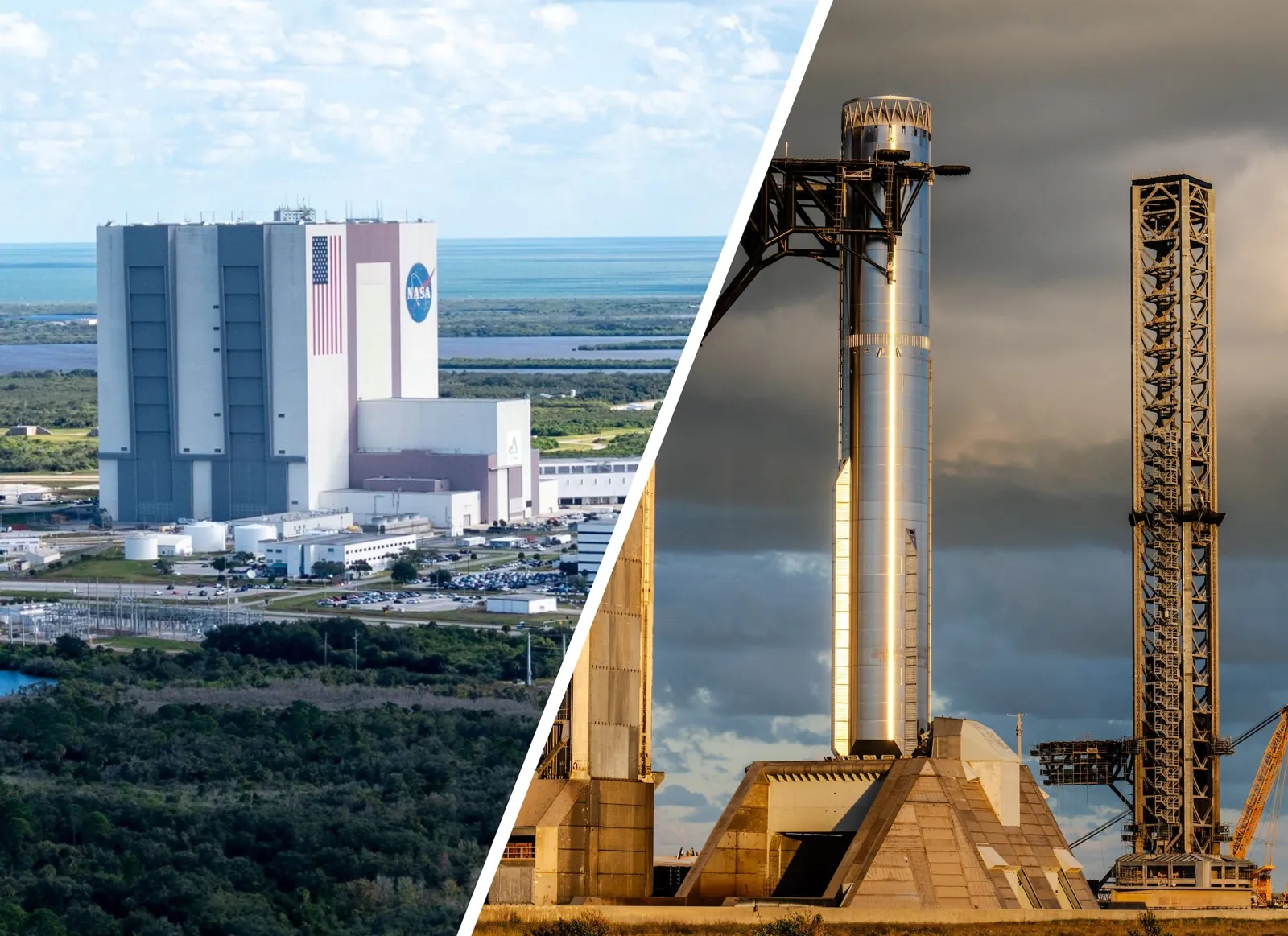
(Lead Image: (Left) The Kennedy Space Center VAB in October 2026. Credit: Julia Bergeron for NSF. (Right) Pad 2 and Pad 1 at Starbase, Texas. Credit: Ceaser G for NSF)
KSCPadsSpaceXStarbaseStarship 0 FacebookTwitterPinterestEmail previous article Launch Preview: Falcon 9 and GSLV rockets scheduled to launch />
 />